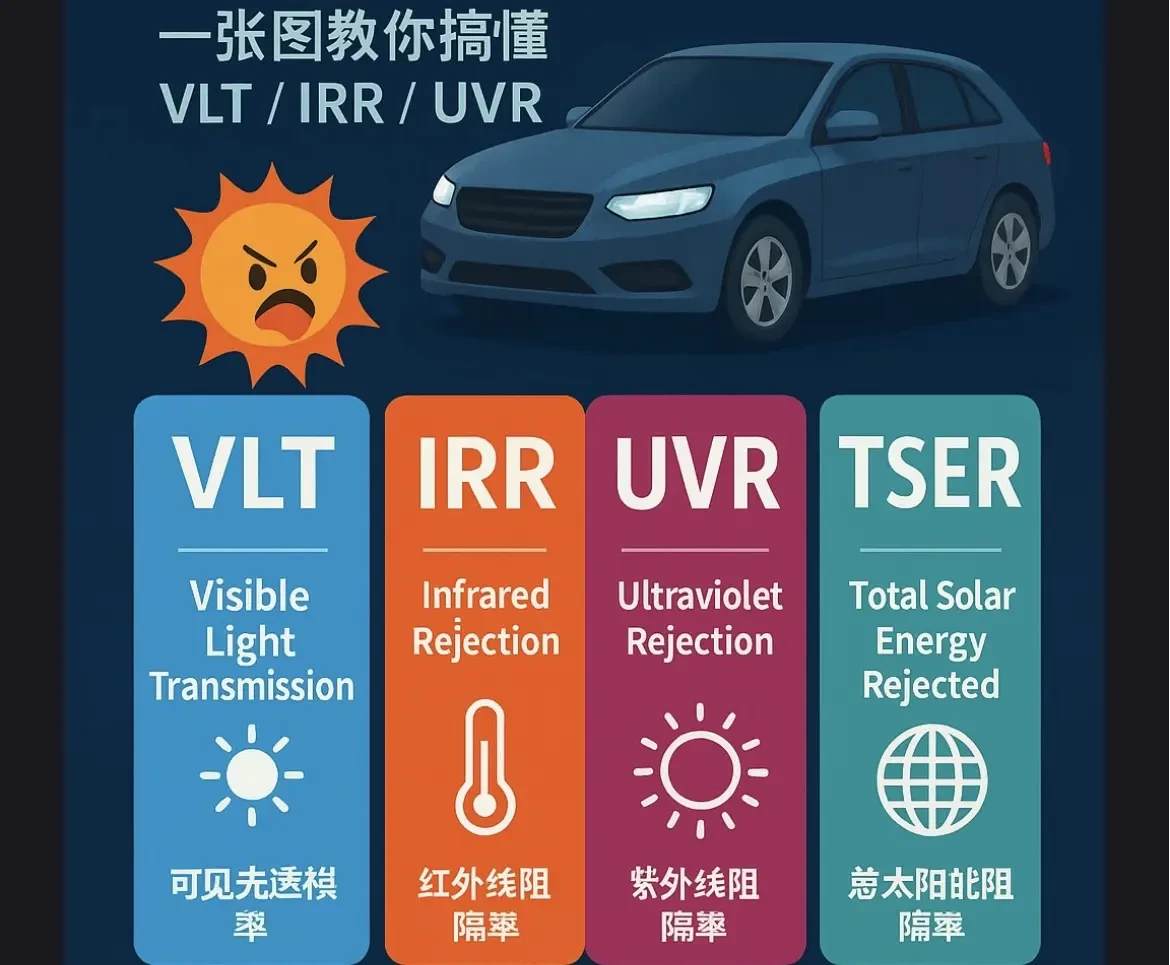
When sourcing window film, distributors encounter a range of technical specifications that can be difficult to interpret without a clear framework. The three most important metrics are TSER (Total Solar Energy Rejected), IRR (Infrared Rejection Rate) and UV rejection. Understanding what each number represents — and what it does not — is essential for making informed purchasing decisions.
TSER measures the total percentage of solar energy that a film prevents from entering the vehicle through the glass. It accounts for visible light, infrared radiation and ultraviolet radiation combined. A higher TSER value generally means better overall heat reduction inside the cabin. For hot-climate markets in the Middle East and Southeast Asia, films with TSER above 50 percent are typically preferred by end customers.
IRR specifically measures how much infrared radiation the film blocks. Since infrared is the primary source of the heat you feel on your skin, IRR is often the number that installers and car owners care about most. However, a high IRR alone does not guarantee a high TSER, because visible light also contributes to heat buildup. Some films achieve high IRR by using ceramic nano-particles while maintaining good visible light transmission.
UV rejection indicates the percentage of ultraviolet radiation blocked by the film. Most quality window films block 99 percent or more of UV rays, which helps protect interior materials from fading and reduces skin damage risk. When comparing supplier datasheets, look for testing standards such as ASTM or ISO to ensure the numbers are measured under consistent conditions rather than in-house estimates.